Download PDF
Download page Patch Method: Nearest Neighbor.
Patch Method: Nearest Neighbor
The Nearest Neighbor method is parameterized with a Distance and a Minimum Patch Area. Chunks are grouped into a neighborhood if separated from each other by less than or equal to the user-defined distance value. Separation between chunks is measured as the smallest distance from edge to edge. Individual chunks can have many connections to other chunks. A chunk isolated by more than the distance value in all directions is placed in its own neighborhood. Once neighborhoods have been identified, habitat areas for each neighborhood are divided into patches per the user-defined minimum patch area value.
Patch processing is quite involved (Figure 40). The process begins with a rule that governs throughout: Process single connected chunks whenever available. Connections between chunks are established when identifying neighborhoods. Chunks with only one connection act with other chunks through that connection. When a chunk is processed, it is split into patches per the user-defined Minimum Patch Area. For a single connected chunk, this is done by radiating from the chunk point most remote from the connection until the captured area satisfies the minimum patch area criterion. The captured area is then assigned a patch identifier plus associated attributes and removed. This process repeats, radiating from the new most remote point, cutting the next patch, and so on. When the remaining area of the chunk is too small to make a patch, the additional area needed is captured by radiating from the connection point on the connected chunk to complete the patch. The single connected chunk is then fully processed and its connection point pair is resolved, thereby reducing the complexity of the neighborhood and perhaps creating other single connected chunks that can be processed.

Figure 40. Patch processing with the Nearest Neighbor method. First, any single connected chunks are processed (a). If none, a tiebreaker is applied that identifies (b) the largest Theissen area of patches connected to the short end of a bounding box and then processes that area as if it were a single connected chunk (c). This sequence of processing single connected chunks and applying tiebreakers is repeated until remaining area is not enough to make a patch (d).
Tiebreakers are applied when all chunks have multiple connections. In this case, the algorithm frames the remaining chunks with a bounding box. Chunks that touch the short ends of the bounding box are split into Theissen areas based on the locations of their connected points. The largest Theissen area is processed as through it were a single connected patch. This action is repeated as many times as necessary.
Standard output for Nearest Neighbor includes a displayed results layer of patches with attribute information about area, neighborhood, pass, validity, and suitable area, if the use suitabilities option was selected. Information about the simulation, connected points, neighborhood characteristics, and chunk characteristics are stored in a geodatabase specific to each run. When the generate detailed output option is selected, displayed output also include connection point, neighborhood, and chunk layers. Theissen areas and bounding boxes are stored in the geodatabase. Pass refers to a counter that advances with each application of a tiebreaker, which is useful when reviewing process results.
When the Use Suitabilities option is selected, chunks are split into patches based on value-weighted areas. This presents two main complications for the nearest neighbor method. First, the areas gained when radiating from the starting point of a patch are now variable in value. Second, the algorithm now needs to consider each raster cell (raster values are used as suitabilities), which could lead to scale issues when the tool is instructed to process large rasters comprised, potentially, of millions of cells. To account for suitability and maintain process integrity, input rasters were converted internally to point coverages. Radii expanding from the starting point of the patch were tested until a radius captured enough value-weighted (raster value multiplied by cell area) points to satisfy the minimum patch area criterion. A bisection method was used to iterate between the radius that first met the criterion and the radius that last failed to meet the criterion in search of a solution that would yield a patch area at least but close to the minimum patch area. The default number of iterations performed is set to 6, but could be changed by the user to any integer from 2 to 10.
Figure 41 shows Nearest Neighbor patch results for Little minnow spawning habitat processed with suitabilities. Larger patches occur in the poorest habitat because more total area is required to meet the minimum (suitable) patch area parameter.
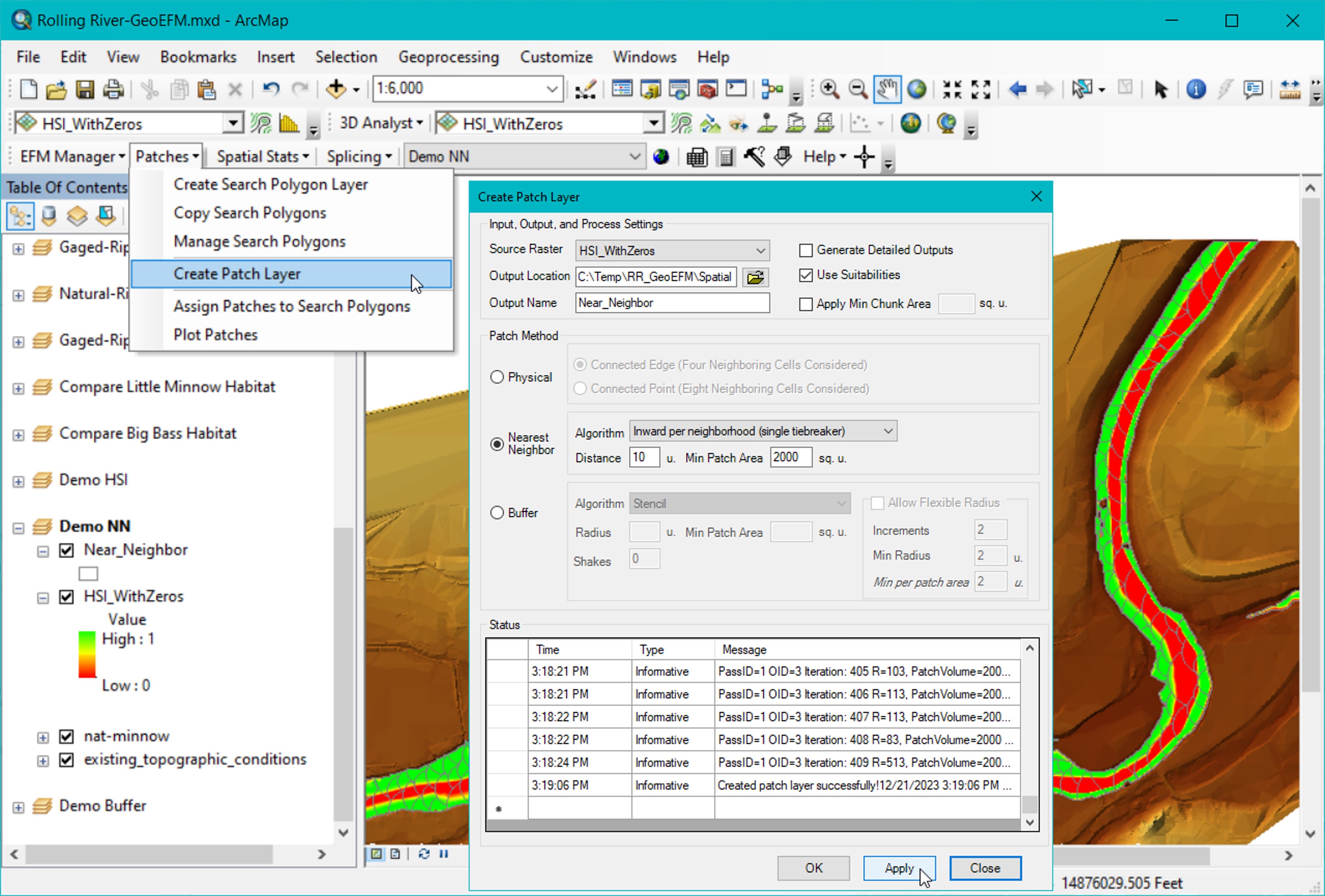
Figure 41. Creating a patch layer using Nearest Neighbor method.